






What to Consider When Building a Website So That Your Business Will Be Recommended by GPT and Other Neural Networks
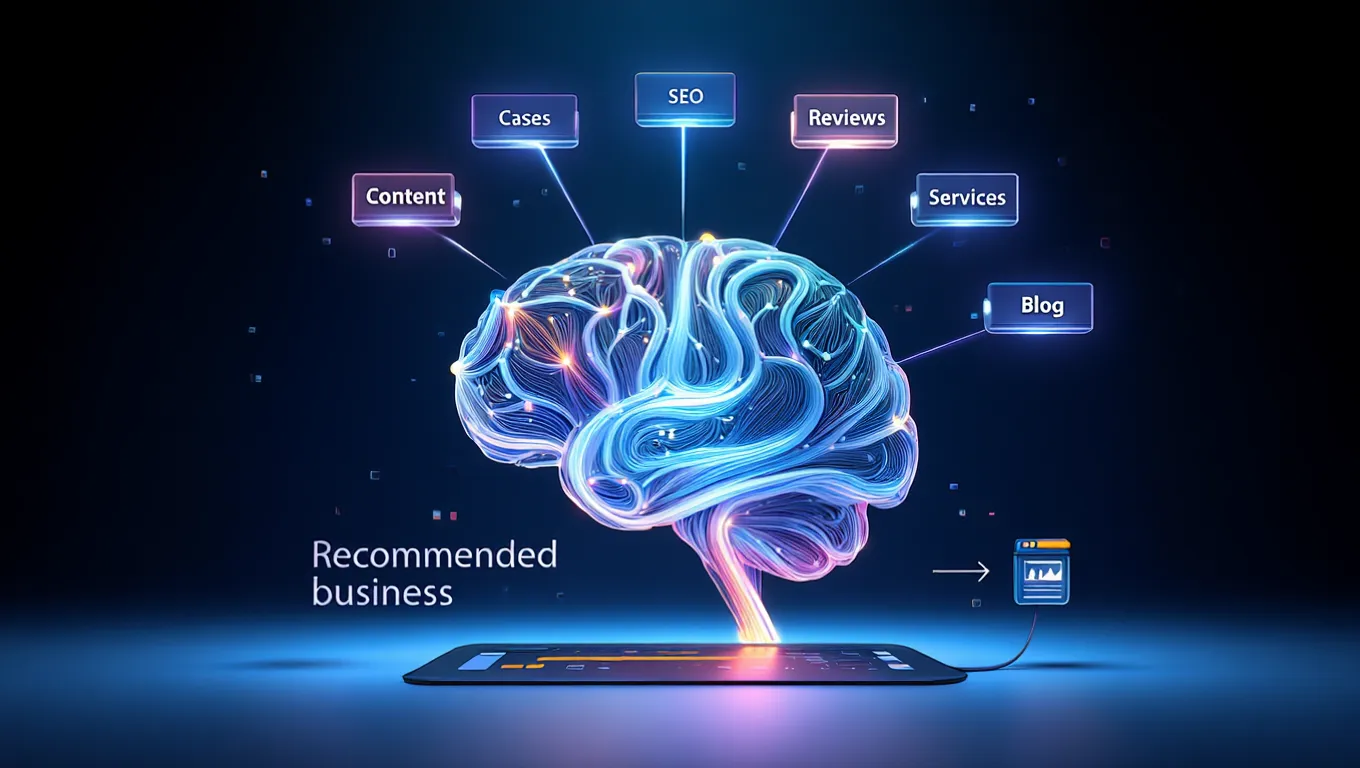
The way people search for information is changing. In the past, users would look for answers on Google. Today, they’re increasingly asking questions of GPT, Claude, Gemini, and other neural networks.
For example: “Recommend a web development agency” or “Which CRM is best for a small business?”
In response, the AI generates a list of companies, services, or solutions. And often, the user clicks on the recommendation without having to open dozens of search results pages.
This creates a new challenge for businesses—to design a website so that neural networks recommend your company specifically.
Our partners at Solve Marketing have a team that specializes in digital strategies, SEO, and website development for businesses. Based on the company’s experience, website structure, expert content, and technical optimization affect not only search rankings but also whether a company appears in AI tool responses.
In this article, Solve Marketing experts will break down:
- how AI finds information about companies;
- what factors influence recommendations;
- what to consider when creating or updating a website.
How Neural Networks Find Business Information
GPT models generate responses based on information already available in open sources. These sources include company websites, corporate blogs, online media, business directories, service ratings, open databases, as well as forums and professional communities.
If a business has virtually no presence in the public information space, the neural network simply doesn’t have enough data to recommend it. Therefore, the basic rule is simple: the more structured and authoritative information about a company is available online, the higher the likelihood that AI systems will include it in their recommendations. In this ecosystem, the company’s website plays a key role, as it is the primary source of information about the brand.
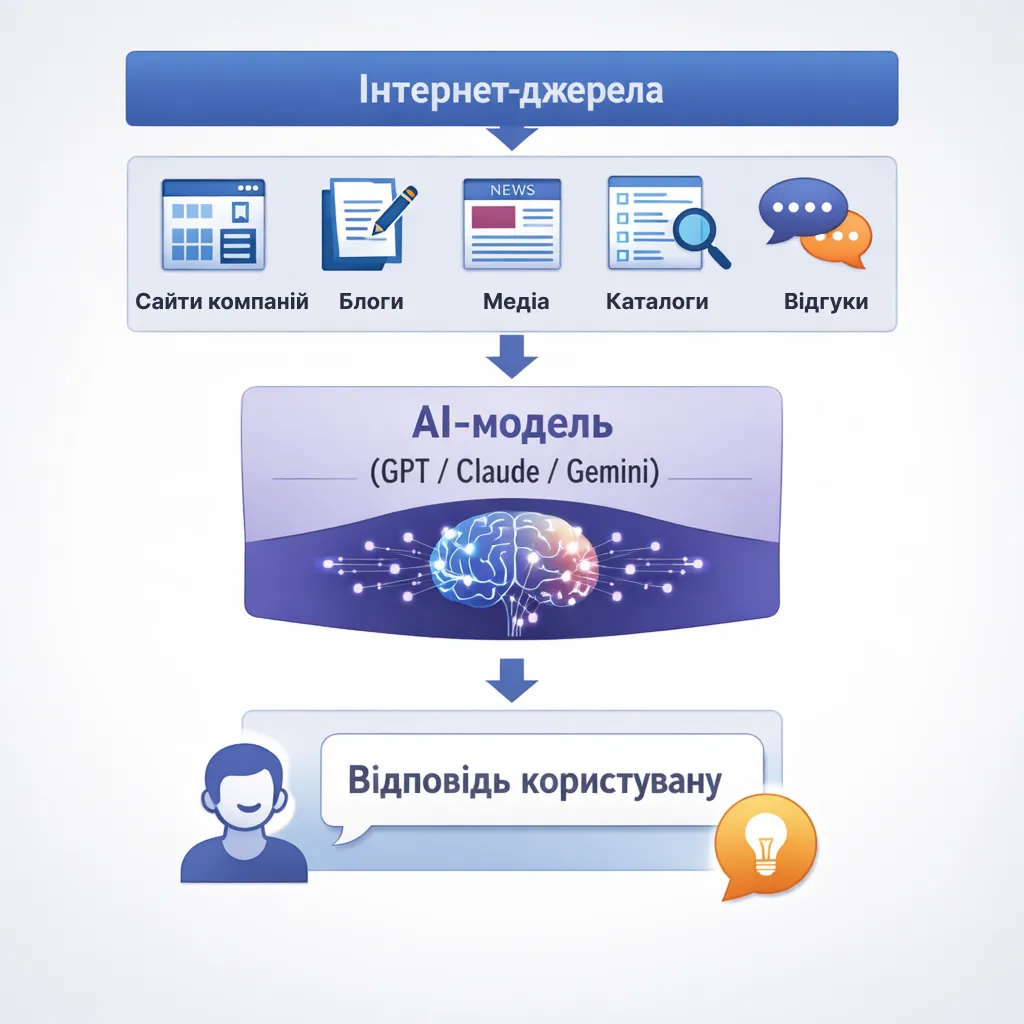
Information sources that use AI models to generate recommendations
AI models analyze text structure and content. They work best with content that:
- has a clear hierarchy of headings (H1–H3);
- answers specific user questions;
- contains lists, tables, or structured blocks;
- is written in simple and clear language without abstractions.
It’s also important to note that many AI tools use the principle of answer extraction. This means that the algorithm searches the page for a specific text fragment that best answers the user’s query and uses that exact fragment in the response.
Therefore, pages that directly answer questions (for example, “How to choose a CRM for a small business”) are more likely to appear in recommendations.
Clear Business Positioning
Neural networks analyze text. If a website doesn’t explain exactly what the company does, the algorithms can’t correctly determine its area of expertise.
Often, websites use vague phrases such as: “We create innovative solutions for business.” Such phrases sound appealing but lack specific information. Instead, it’s much more effective to clearly state the company’s specialization, such as WordPress website development, SEO promotion for online stores, or UX/UI design for SaaS products.
Clear positioning simplifies the work of search engines and AI models, which analyze a website’s content and determine for which search queries the company should be recommended.
A website structure that is machine-readable
It’s not just people who visit a website. It’s regularly analyzed by search engine bots, AI systems, and various analytics services. That is why the page structure must be logical and easy to understand.
The basic structure of a corporate website usually includes a page with information about the company, a detailed description of services, a portfolio or case studies, a blog, and a contact page. Each page should have a clear title, an understandable hierarchy of subheadings, and logically structured text.
This structure significantly simplifies the indexing of the website and helps algorithms understand the content of the pages more quickly.
An example of a basic website structure that helps search engines and AI algorithms analyze content

Expert Content
Neural networks often use information from websites that regularly publish expert content in their responses. That’s why a blog or knowledge base can significantly impact a company’s visibility in AI recommendations.
Content that offers practical value works best. These can include detailed guides, step-by-step instructions, analytical articles, practical case studies, or research findings.
For example, this includes articles on choosing a CMS for a corporate website, common SEO mistakes that reduce traffic, or a detailed case study showcasing the results of an online store’s optimization.
Such content establishes the brand’s expertise, increases visibility in search engines, and often serves as a source of information for AI-powered tools.
Case Studies and Real Results
Neural networks work much better with facts and figures than with general marketing phrases. For example, the phrase “We help businesses grow” seems too abstract. In contrast, a specific result such as “After the website redesign, the conversion rate increased from 1.8% to 3.4%” provides much more useful information.
A high-quality case study should include a description of the client’s challenge, an explanation of the solution implemented, and a specific result backed by numbers. This format builds trust with both potential clients and the algorithms that analyze content.
Solve Marketing Case Study: Website Development for CRM Solutions
After the website went live and we began systematic work on SEO and content, the project started to generate stable organic traffic without relying on paid advertising.
Over the past year:
- over 10,000 organic visits
- over 100 leads per month
- a conversion rate of over 1%
- over 1.16 million search impressions
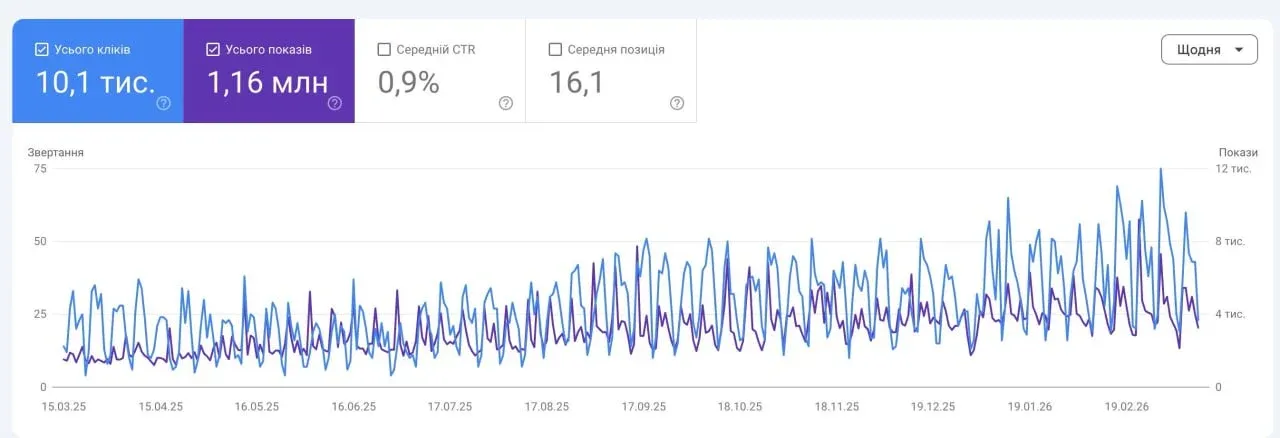
All traffic comes from organic sources, without active use of paid channels.
This is an example of how a well-designed website, page structure, and expert content can become a standalone channel for attracting customers—and a foundation for further growth, particularly in the context of AI recommendations.
For more details on the implementation and approach, see the full case study.
Technical SEO
Even the highest-quality content won’t be effective if the website has technical issues. Search engine algorithms and neural networks take the technical condition of a website into account during their analysis.
Key factors include page load speed, proper website functionality on mobile devices, correctly filled-out metadata, a logical heading structure, the presence of a sitemap, and the absence of duplicate pages.
Technical optimization helps search engines and AI tools index the website correctly and better understand its structure.
Credible references on the Internet
Neural networks analyze not only the company’s website itself but also information about it from other sources. These sources may include online media, industry blogs, business directories, agency rankings, and professional platforms.
The more high-quality mentions of the brand in reliable sources, the higher the level of trust in the company. That is why guest posts, PR articles, and partner content remain important tools for building visibility.
Clear information about the company
The website should include basic information about the business. This includes the company name, field of activity, geographic scope, and contact information. It’s also important to showcase the team and the experts working on projects.
Additionally, it’s a good idea to include profiles of specialists, photos of the team, and information about their work experience. This type of content helps AI systems better identify the brand and form a more complete picture of the company.
Reputation and Reviews
Neural networks can take into account information from various platforms that feature company reviews and ratings. These sources include review pages on search engines, professional directories, and industry rankings.
The presence of genuine reviews reinforces trust in the brand. Therefore, it is important to publish real case studies, showcase clients, and back up results with concrete data.
Checklist: How to Prepare Your Website for AI Recommendations
You can assess how well a website is optimized to appear in neural network responses based on the following criteria:
- The company’s line of business is clearly defined (without abstractions).
- There are separate pages for each service.
- The website features a blog or knowledge base with useful content.
- Case studies with statistics and results are included.
- There is an “About Us” page with a description of the team.
- Metadata (title, description) is properly set up.
- The website loads quickly and works properly on mobile devices.
- There are mentions of the company on other websites.
- There are customer reviews or testimonials.
Things to Keep in Mind
Neural networks are gradually becoming the new search interface. Users are increasingly turning to AI services to get recommendations for services, contractors, or tools.
For a business to appear in these recommendations, its website must clearly explain the company’s area of expertise, have a clear structure, regularly publish expert content, showcase case studies with real results, and be technically optimized. It’s also important to have authoritative mentions of the company online.
In fact, this represents a new level of SEO—optimization for AI recommendations. Companies that start working on this now will be able to gain a competitive advantage in the coming years.

Key Factors That Influence Company Recommendations in Neural Network Responses
If you’re planning to create a new website or want to adapt an existing one to new AI search algorithms, you should start by auditing its structure, content, and technical optimization. This will help you understand how ready your website is to appear in neural network responses.
At Solve Marketing, such an audit is often the first step toward improving a business’s visibility in both search engines and AI tools.
Solve Marketing offers a free consultation for businesses. When you schedule your appointment, mention that you’re from GTRIX, and during a one-hour online call, our specialists will:
- conduct a quick assessment of your marketing;
- identify weaknesses in your website and strategy;
- provide guidance on how to prepare your business for AI-powered search.
FAQ: How to Get Featured in AI Recommendations
Can a website appear in GPT's responses without SEO?
That’s unlikely. AI uses the same sources as search engines, so basic SEO optimization is essential.
Which is more important—content or technical optimization?
Both factors are important. But without clear content, even a technically perfect website won’t be recommended.
How soon will the website start appearing in AI responses?
It depends on the amount of content, the number of mentions, and the credibility of the sources. On average, it takes anywhere from a few weeks to a few months.
Do neural networks take company reviews into account?
Yes. They can analyze information from various platforms, so your online reputation matters.